27th May 2026
Student mental health in schools: what the data says

One in five children aged 8–16 in England now has a probable mental health condition, according to 2023 NHS data. That’s nearly double the rate in 2017.
Schools are investing in support. But the pressure on teachers keeps growing. This article explains why and makes the case that closing academic knowledge gaps is the most effective way to reduce student mental health pressure in schools.
The problem isn’t awareness. It’s capacity.
Schools aren’t ignoring student mental health. The Pearson School & College Report 2026 found that mental health and wellbeing initiatives are among the top positive impacts schools report investing in over the last two years.
But investment in support doesn’t automatically translate into capacity to deliver it.
The Education Support Teacher Wellbeing Index 2025 found that 70% of education staff provide emotional regulation support to students every week. That’s a 31% increase on pre-pandemic levels. Meanwhile, 78% of education staff report experiencing stress at work, and 86% of senior leaders say the same.
These two trends aren’t coincidental. The more students need, the more teachers absorb. And teachers are already running close to empty.
Exam anxiety is driving much of the problem
Student mental health in schools is largely an academic anxiety problem. The data is specific: academic performance is the top worry for 42% of secondary students, and school expectations sit alongside it at the same level (Pearson, 2026).
A 2024 National Education Union survey of over 8,000 members found that, among English state secondary teachers:
- 78% say they regularly see exam anxiety in their students
- 60% say they regularly see chronic anxiety
- Just 42% have confidence that the pupils they refer will actually get the help they need from existing support systems.
The NSPCC, working with Teacher Tapp, reported in July 2024 that 91% of secondary teachers believe their students worry too much that exam results will determine their future.
The students most likely to present to pastoral staff are often the same students with the largest gaps in their subject knowledge (Pearson, 2026).
Pastoral support alone can’t close an academic gap
Pastoral support can’t close a knowledge gap. When a student is anxious about Chemistry or struggling in Economics, the instinct is to offer reassurance. But reassurance doesn’t address the subject-specific fear driving the anxiety.
According to Pearson’s data, 29% of secondary students say ‘not feeling clever enough’ directly impacts their learning, up four percentage points year on year. That’s not a confidence problem that pastoral support can solve on its own. It’s a subject mastery problem dressed as a confidence problem.
If a student doesn’t understand the content, no amount of reassurance will make them feel ready for the exam. And if they don’t feel ready for the exam, the anxiety doesn’t go away.
The workload cycle nobody wins
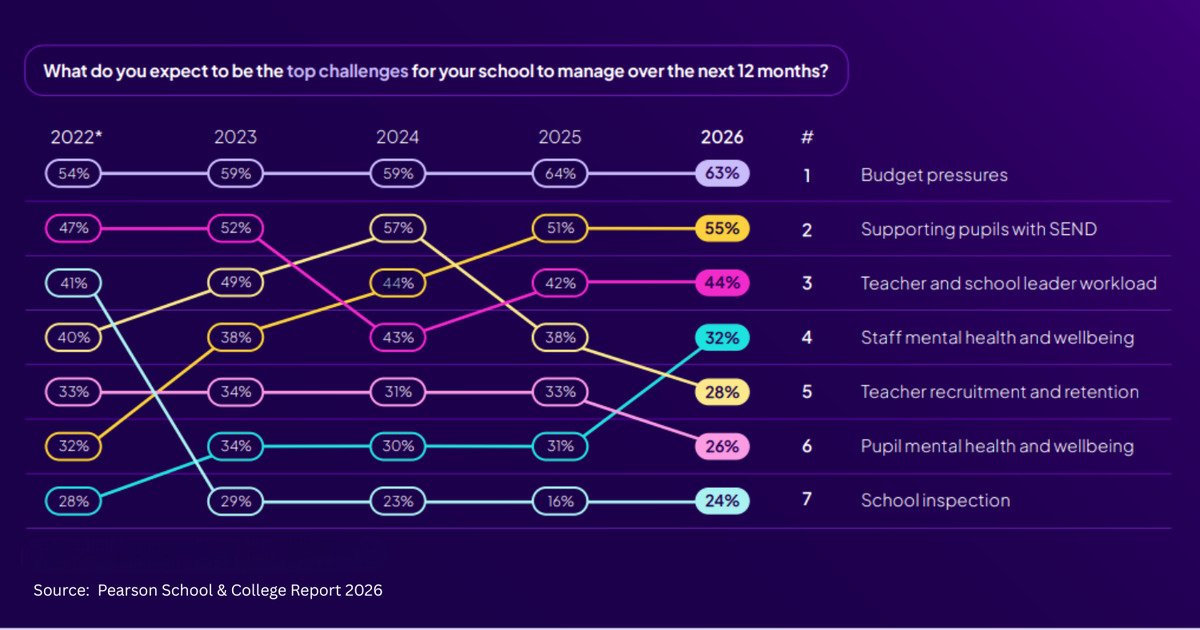
Teacher workload is at breaking point, and student mental health is making it worse. Forty-four per cent of secondary teachers cite workload as a top challenge for the next 12 months (Pearson, 2026). Budget pressures (57%) and SEND support (42%) compound the squeeze. There’s no slack in the system to absorb a growing mental health caseload on top.
A 2025 report from the Health and Safety Executive cites stress, depression or anxiety for 52% of all work-related ill health and 62% of all working days lost due to work-related ill health.
In education specifically, 2.5 million working days are lost each year as a result of work-related stress (Education Support, 2025). These aren’t abstract statistics. They’re the cost of a system where teachers are expected to be subject experts, pastoral leads, SEND coordinators, and mental health first responders at the same time.
How structured independent study reduces student mental health pressure
The most effective thing a school can do for student mental health, at the academic level, is reduce the number of students who reach anxiety through subject unpreparedness.
That means building independent study habits that work without requiring teacher time to sustain them.
Students who have the right tools are better able to take ownership of their own learning. Support from teachers remains the single biggest factor (42%) students say helps their progress. But the importance of access to digital learning resources is rising, up six percentage points since 2024, to 27% of students (Pearson, 2026).
Up Learn’s 2025 Evaluation of Learning Outcomes, based on data from nearly 2,500 exam entries across 23 schools, found that:
- Completing 90% or more in-app assignments correlates with an average increase of about one grade
- Completing 30+ spaced retrieval sessions correlates with a 70% greater likelihood of achieving A or A*
- Achieving Master (80%+) in at least 20% of course sections correlates with nine additional months of progress
These aren’t marginal gains. They’re the kind of outcomes that shift value-added scores at cohort level.
Critically, these gains happen outside the classroom. They don’t require teacher time to deliver. They require a structure that holds students accountable for working independently and a platform rigorous enough to make that work meaningful.
That link between academic unpreparedness and mental health is backed by Up Learn’s own data. In a 2025 end-of-year survey of 258 educators, 98% said the mental health crisis in young people had negatively impacted their students’ learning. And 43% described that impact as extreme.
Pastoral support matters. But it can’t do the work that subject mastery needs to do. The intervention with the clearest evidence base is ensuring students actually know the content.
What Up Learn does and doesn’t do
Structured independent study reduces the academic anxiety that drives student mental health problems without adding to teacher workload. Here’s what that looks like in practice with Up Learn:
- Students work through fully mapped A Level or GCSE content at their own pace
- They complete regular assignments set by their teacher
- They build retrieval habits through spaced practice sessions
- Teachers get a clear dashboard view of who’s keeping up and who’s falling behind, before the gap becomes a crisis
What this means for sixth form specifically
At A Level, one in four college students says mental health and wellbeing is the top factor impacting their learning (Pearson, 2026). Another 26% cite uncertainty about their future as a top worry. The stakes are highest here, and the support structures are often thinnest.
Getting a job is the number one concern for 30% of college students. The anxiety is real, it’s specific, and it sits directly on top of the most demanding academic programme most young people will have encountered.
For heads of sixth form and heads of department, the practical question isn’t whether to invest in student wellbeing. It’s how to structure learning so fewer students reach the crisis point in the first place.
Early intervention at the academic level
Early intervention here doesn’t mean a Year 13 panic session in March. It means structured independent study built into sixth form from the start of Year 12, so that:
- Any gaps in learning are caught early
- Student confidence builds alongside the curriculum
- Students arrive at the exam period having already done the work
That’s the intervention with the clearest evidence base. And it’s the one that doesn’t require a single extra hour of teacher time to sustain.
The case for schools acting now
Student mental health doesn’t follow a calendar. The pressure builds across the whole year, and so does the case for doing something about it.
Schools that incorporate structured independent study from the start of Year 12 see measurably better outcomes by the end of Year 13. The data from Up Learn’s 2025 evaluation is consistent across subjects, schools, and cohorts. When students use the platform well, consistently, and with mastery as the goal, they make more progress and achieve higher grades.
It takes two minutes to find out what your school could save. The alternative is another year of the same cycle.
What could your school save by improving outcomes without adding to workload?
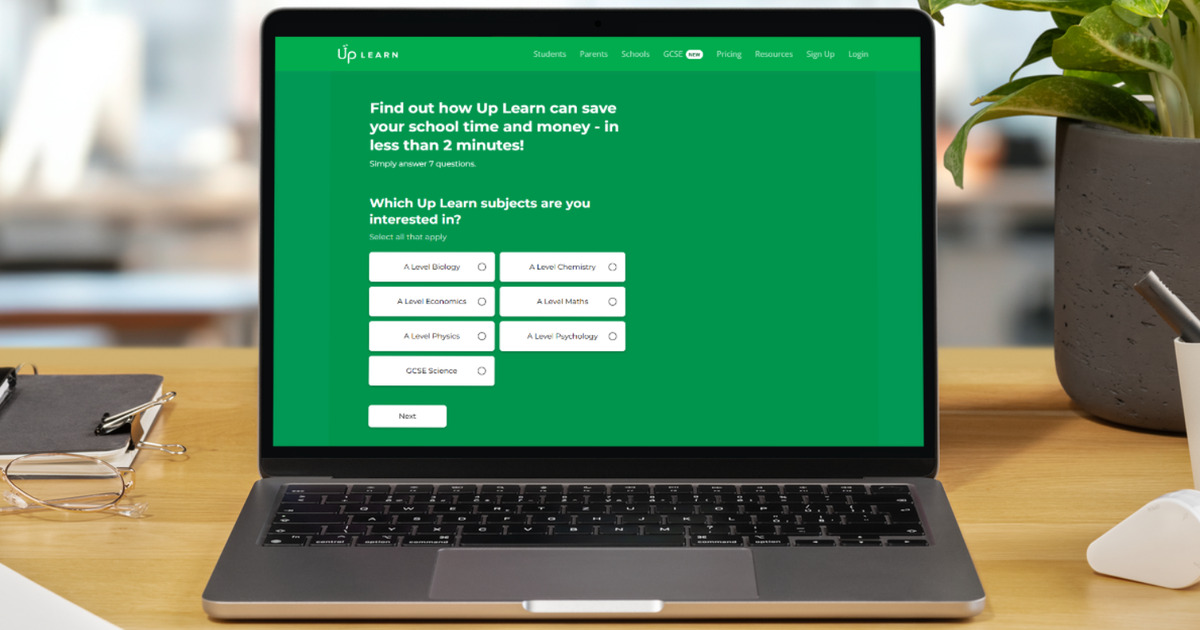
We’ve built a free 2-minute calculator to help you estimate what your school could save with Up Learn across:
- Teacher time
- Staffing and resource costs
- Impact based on your cohort size
Most schools are surprised by the result. Calculate your school’s potential savings.
MAKE AN ENQUIRY
See how Up Learn can help you transform your students’ attainment